
However, diluting stock can provide advantages such as raising capital, reducing debt and motivating employees through equity-based compensation plans. As a result, diluted shares aren’t a reason to jump ship when investing, but it’s crucial to account for them when calculating your return on investment. Basic share outstanding includes the present number of shares that are readily available Interior Design Bookkeeping on the secondary market.
Equity Value Example: Apple (NASDAQ: AAPL)
- Next, you’ll want to look for the common stock line item on the company’s balance sheet.
- Upon completion, earn a recognized certificate to enhance your career prospects in finance and investment.
- Fully diluted shares represent the total number of common shares that would be outstanding and available to trade on the open market if all possible sources of conversion are exercised.
- Outstanding shares impact a company’s market capitalization, which is calculated by multiplying the stock price by the number of outstanding shares.
- That means that the company is giving the shareholders 20% of the profit that the company earned in that year.
- Besides options, other examples of dilutive securities include warrants and restricted stock units (RSUs).
- Redeemable shares give an option to the company to repurchase its own stock if it needs to reduce the number of outstanding shares or change its capital structure.
Outstanding shares are the aggregate number of shares that a corporation has issued to investors. This is an important number, since it is used to calculate the earnings per share of a publicly-held business. It is a less-commonly used number in the financial reporting of privately-held businesses.
Stock Splits and Their Impact on Shares Outstanding

Shares outstanding are the total shares of a company currently held by shareholders. The outstanding shares figure is useful to know for an investor that is contemplating buying shares in a company. Dividing the number of shares to be purchased by the number of shares outstanding shares outstanding formula reveals the percentage of ownership that the investor will have in the business after the shares have been purchased.
How Do Outstanding Shares Affect Investors?
- If the company has not bought back shares from investors and does not have treasury shares, this line item won’t show up on the balance sheet.
- This “issued” stock can be less than the total authorized, but it can never be more.
- Outstanding shares refer to the authorized shares that have been issued to a company’s shareholders, excluding the treasury stock retained by the company itself.
- The difference between the number of shares assumed to have been issued related to the dilutive securities and the number of shares repurchased as part of TSM is the net dilutive impact.
- Moreover, resources like FINRA provide valuable insights into the financial health and market activities of companies.
- Outstanding shares, by contrast, include all shares currently held by shareholders, both public and private, excluding treasury shares.
- Colgate’s ordinary shares were 930.8, and the effect of dilution due to stock options and restricted stock units is 9.1 million.
Obviously, those option holders in theory could exercise their options to create new shares. Should they do so, however, they would also contribute $50 million in cash to the corporate treasury. Working with an adviser may come with potential downsides, such as payment of trial balance fees (which will reduce returns). There are no guarantees that working with an adviser will yield positive returns.
Look at the Treasury Stock Line Item
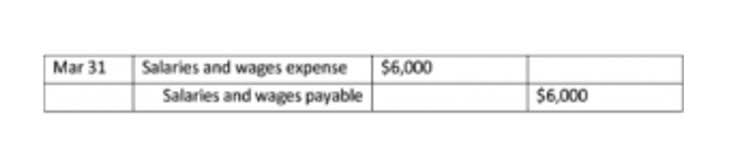
Alternatively, the total number of shares outstanding can be easily calculated as a company’s market capitalization divided by the current share price. This section provides the sum of the total authorized shares, the total number of shares outstanding, and the total floating shares. Dilution occurs when a company issues additional shares, reducing current investors’ proportional ownership in the company. You can find the number of shares outstanding by looking at the company’s balance sheet.

Company A has issued 25,800 shares, offered 2,000 shares to two partners, and retained 5,500 stocks in the treasury. Here’s how to find and calculate the amount of preferred stock outstanding from a company’s balance sheet. Another metric calculated using shares outstanding is the price-to-book (P/B) ratio. Shares outstanding are the basis of several key financial metrics and can be useful for tracking a company’s operating performance.